Jammer Deals | Affordable Picks | Free Shipping
Your privacy is our top concern! We offer dependable solutions to safeguard you from unauthorized monitoring, ensuring your confidentiality in any setting.
Jammer Deals | Affordable Picks | Free Shipping
Your privacy is our top concern! We offer dependable solutions to safeguard you from unauthorized monitoring, ensuring your confidentiality in any setting.
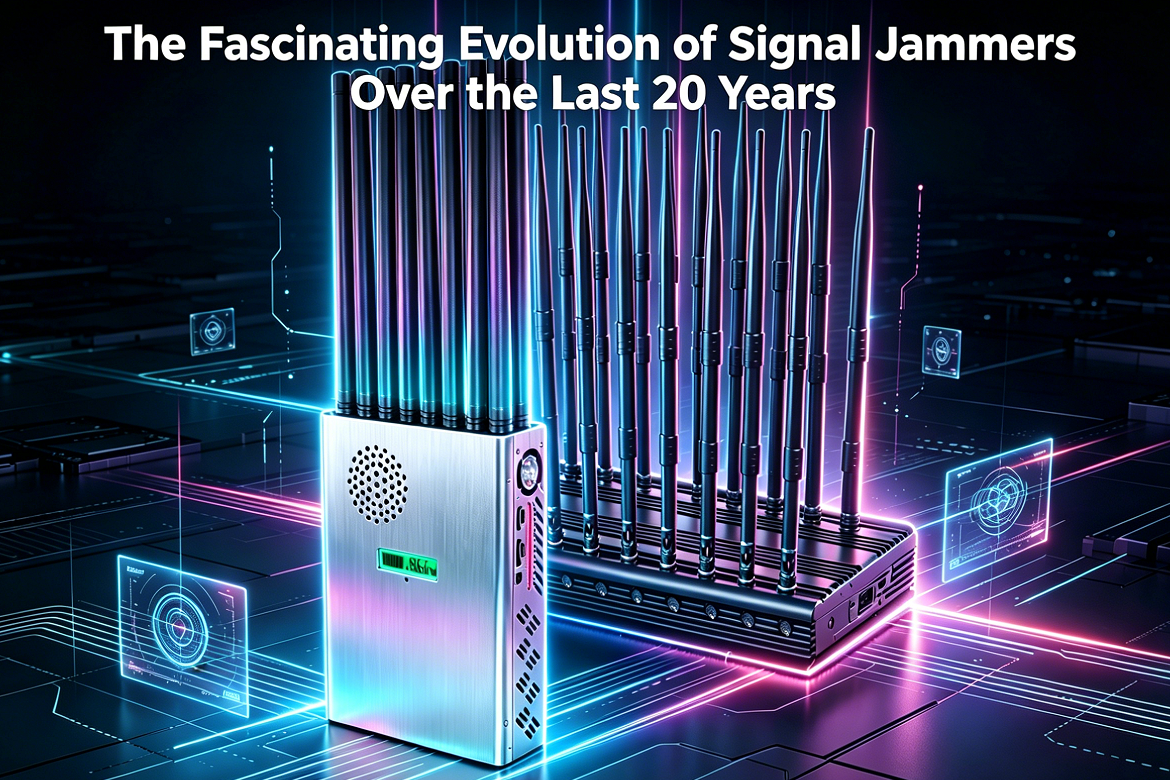
For more than two decades, "signal jammers" have evolved alongside the equipment and communication systems that surround modern life. While many people focus on how mobile networks have changed from GSM to 5G, an equally interesting story is how signal blockers themselves have transformed in response to new challenges, user expectations, and increasingly complex wireless environments.
From bulky single-purpose units to compact multi-band equipment, the evolution of jamming device reflects a broader trend toward greater versatility and convenience.
The first generation of signal jammer emerged during an era when mobile phones were primarily used for voice calls and text messaging. Wireless communication was relatively straightforward, and the number of connected equipment was limited.
As a result, early frequency blocekr were often designed with a single objective in mind. Their hardware was basic by modern standards, and most models focused on a narrow range of frequencies.
These early products were valued mainly for their ability to affect mobile phone communications, with little emphasis on portability or advanced functionality.
As mobile technology became part of everyday life, users began looking for more convenient solutions. This demand encouraged manufacturers to rethink traditional designs.
One of the biggest milestones in the evolution of signal blockers was the transition from stationary equipment to portable devices.
Manufacturers introduced:This shift made portability a defining feature of many modern products and changed how people perceived silencer technology.
As wireless devices multiplied, so did the variety of signals operating in the surrounding environment.
Mobile phones were no longer the only wireless devices in use. WiFi routers, GPS receivers, Bluetooth accessories, and countless other technologies became common.
This changing landscape encouraged the development of "multi-band signal jamming equipment" capable of addressing multiple types of wireless signals within a single equipment.
Rather than relying on separate units for different communication systems, manufacturers increasingly focused on integrated designs that could cover a broader range of application.
This period marked a major turning point in the industry and helped redefine what users expected from modern signal jammers.
The global smartphone boom created another important stage in the evolution of signal blockers.
By the mid-2010s, mobile equipment had become much more than communication tools. Smartphones combined internet access, navigation, social networking, media consumption, and countless digital services into a single device.
As wireless connectivity became more deeply integrated into daily life, expectations for suppressor technology also changed.
Users increasingly valued:The focus shifted from simple functionality to overall user experience.
One often-overlooked factor in the development of jamming equipment is battery technology.
Earlier portable units frequently suffered from limited operating times and heavier battery systems. Advances in rechargeable battery technology helped address these challenges.
Modern designs benefit from:
These improvements have contributed significantly to the practicality and convenience of contemporary portable devices.
The arrival of 5G networks introduced new considerations for manufacturers and users alike.
However, the evolution of frequency blocekr during this period has been about more than simply addressing new frequency bands.
Modern products increasingly emphasize:
In many ways, today's suppressor technology reflects a broader trend toward smarter and more adaptable electronic devices.
The evolution of signal disruptor is not simply a story about GSM, 4G, or 5G networks. It is a story of innovation in design, portability, battery performance, multi-band capability, and user experience.
From large single-purpose devices to sophisticated modern systems, signal jammers have undergone remarkable changes over the years. Understanding this evolution provides valuable insight into how wireless technologies and the products surrounding them continue to develop in an increasingly connected world.