Jammer Deals | Affordable Picks | Free Shipping
Your privacy is our top concern! We offer dependable solutions to safeguard you from unauthorized monitoring, ensuring your confidentiality in any setting.
Jammer Deals | Affordable Picks | Free Shipping
Your privacy is our top concern! We offer dependable solutions to safeguard you from unauthorized monitoring, ensuring your confidentiality in any setting.
5G may be the newest generation of mobile technology, but GSM 2G has not disappeared from every corner of the cellular industry. In fact, it still appears in the specifications of T-8Pro 5G internet jammer and more.
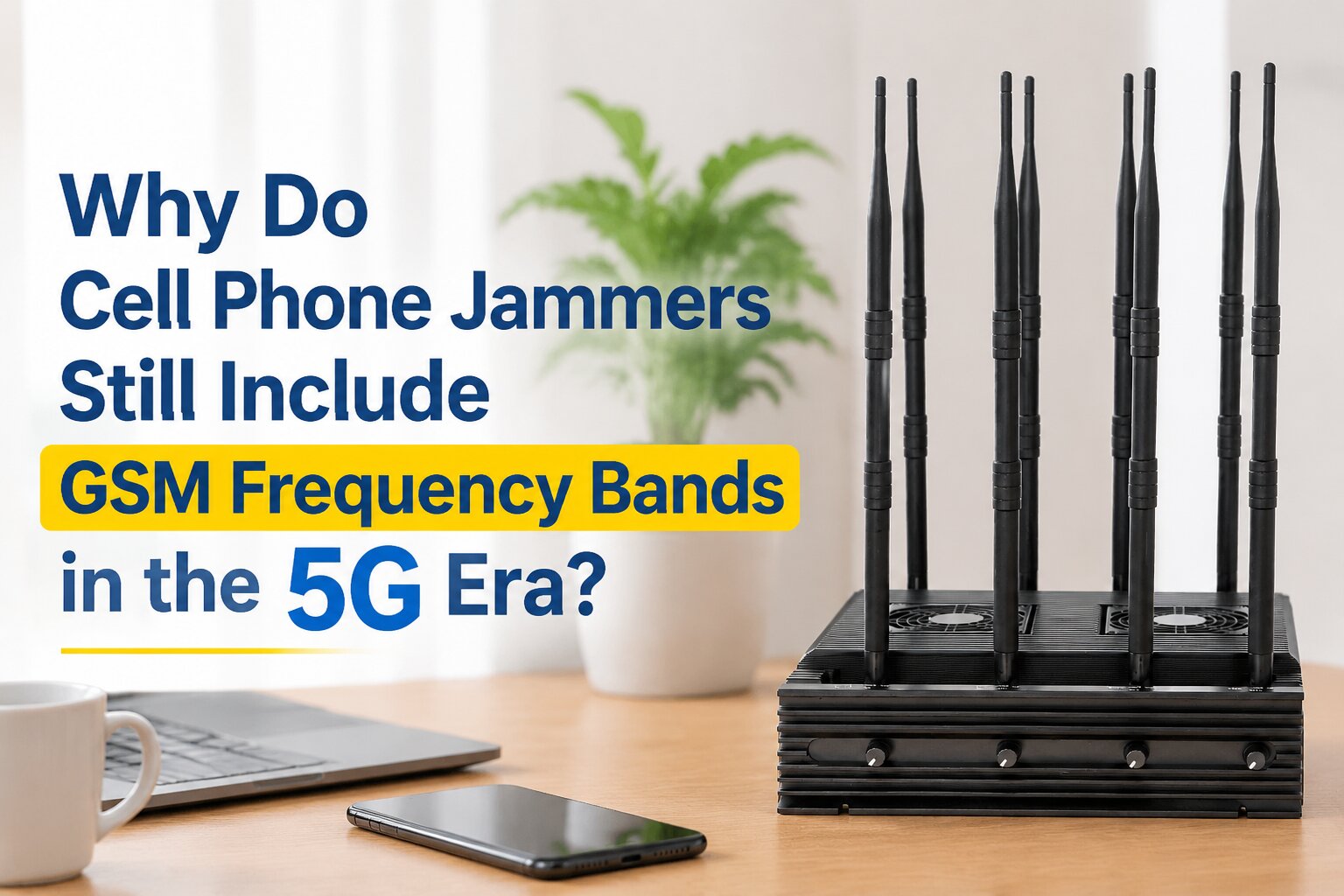
The arrival of 5G does not mean every country has completely abandoned older mobile networks. Different carriers upgrade their infrastructure according to local coverage requirements, operating costs, and existing network investments.
Some international markets have continued operating 2G services for basic voice communication, SMS, and legacy connected devices. This means GSM can still be relevant in certain regions even as 4G and 5G become the primary technologies for modern smartphones, this is why mobile signal Blockers still include GSM frequency bands.
The main reason is that multi-band equipment specifications may cover several generations of cellular communication rather than focusing exclusively on the newest standard. GSM, 3G, 4G LTE, and 5G are separate technologies, each with its own frequency allocations and technical characteristics.
| Network Standard | Generation | Typical Network Applications |
|---|---|---|
| GSM | 2G | Traditional voice calls and SMS |
| UMTS | 3G | Voice communication and mobile data |
| LTE | 4G | High-speed mobile broadband and VoLTE |
| 5G NR | 5G | Advanced mobile broadband and higher network capacity |
For example, a market that has not fully retired its GSM infrastructure may still have older mobile devices or connected equipment relying on 2G services. Meanwhile, newer smartphones may use 4G LTE or 5G depending on carrier availability and device compatibility.
The United States is an important example of regional differences. AT&T discontinued its 2G network in 2017, Verizon retired its legacy 2G and 3G services in 2022, and T-Mobile shut down its remaining 2G GSM network on August 3, 2026.
However, network retirement schedules are not identical worldwide. Some countries continue to maintain 2G infrastructure for older devices and established communication services. This international difference helps explain why GSM still matter for cellular phone blockers.